Why The Communiversity?
South Africa today needs a low-cost, time-efficient educational model that enables its youth to be fully prepared for college and employment.
1. The Need: Further Education and Training
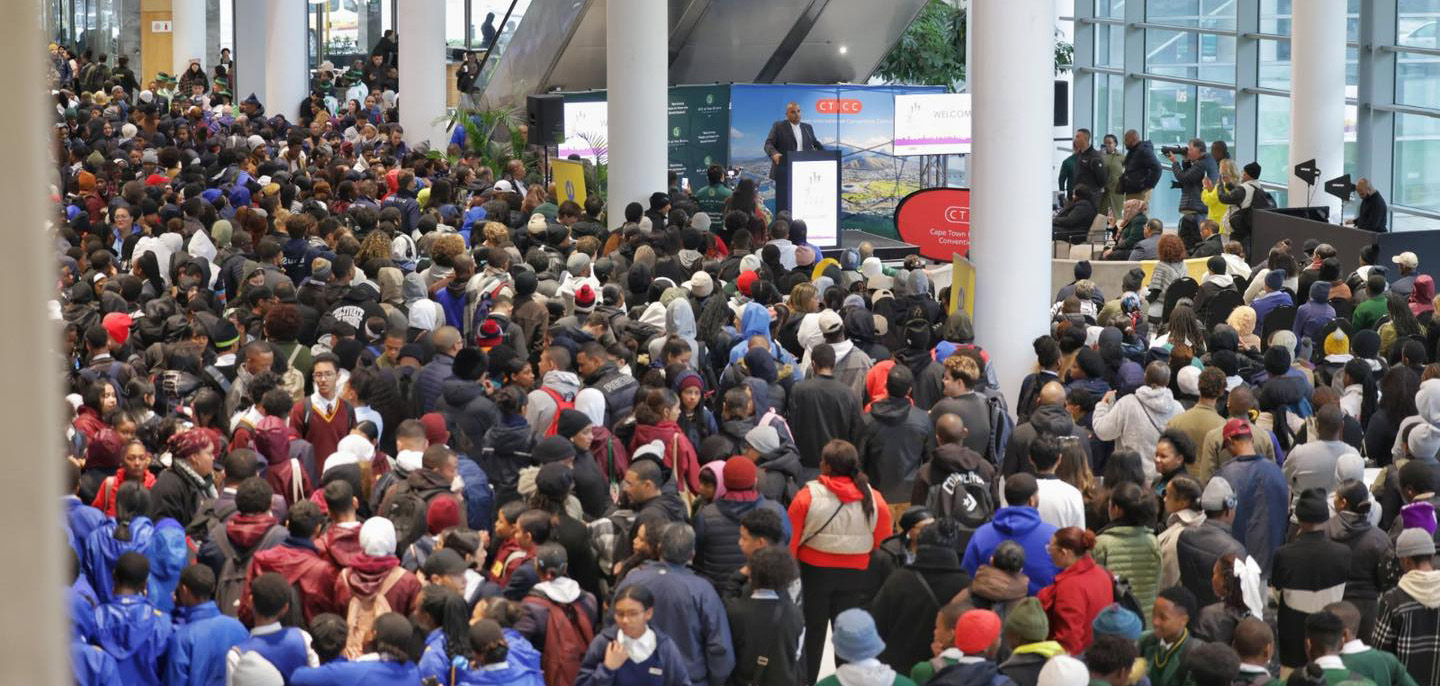
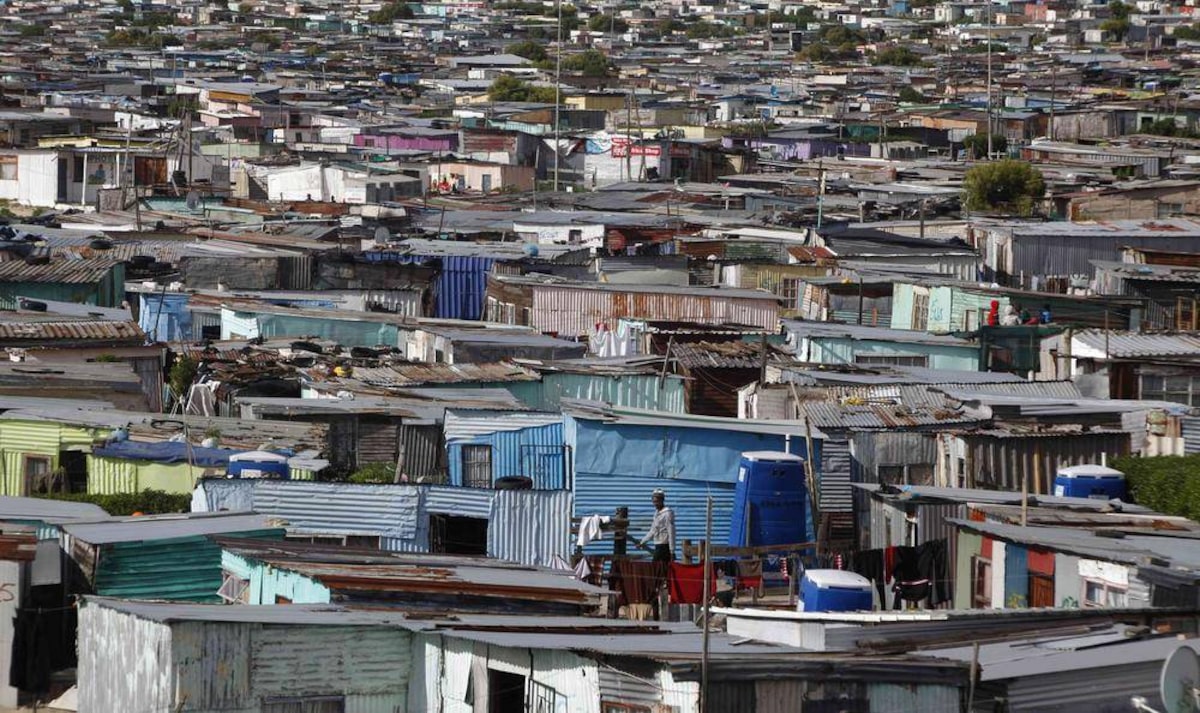
South Africa’s Department of Higher Education and Training identifies post-secondary education and technical training as a critical part of South Africa’s education ecosystem and as urgently crucial to the nation’s economic well-being.Despite this need many young people live in harsh economic circumstances, even on the streets, with no employment, training or college opportunities available. So, in fact, much of the nation’s economic and social instability could be solved by effective post-secondary education and training. Pre-college preparation can assure that students positively commit to the future of the nation, while providing relevant opportunities for bright but financially-disadvantaged youth to fulfill their own goals and dreams for the present and into the future.
Our Solution: Bringing the easily scalable, low-cost Communiversity of South Africa model into every financially-disadvantaged community.
2. The Need: Access and Connectivity
Most young people want desperately to participate in post-secondary education but are unable to meet the academic and other requirements at the colleges and universities and are turned away -- even though most have passed matric and many with a Bachelor’s Pass.
Our Solution: Community partnerships with the Communiversity of South Africa provide access and connection to tertiary education as a vital first step.
3. The Need: Personal Preparedness and Self-Confidence
Business employers, job training programs and higher education institutions often make large investments in hiring, training and educating young people, only to have a high percentage of them leave prior to completion. This is mostly due to a student’s lack of preparedness for further education or work and a general lack of self-confidence set in a background of PTSD that comes from growing up in highly-marginalized communities. Tools for inner growth that help eliminate stress and fear, a focus on goals for the future, developing one’s inner qualities to improve focused attention, behaviour, confidence and determination are as significant as formalized academic or job training.
Our Solution: Preparedness, self-confidence and success are gained through self-development education as offered by the Communiversity.
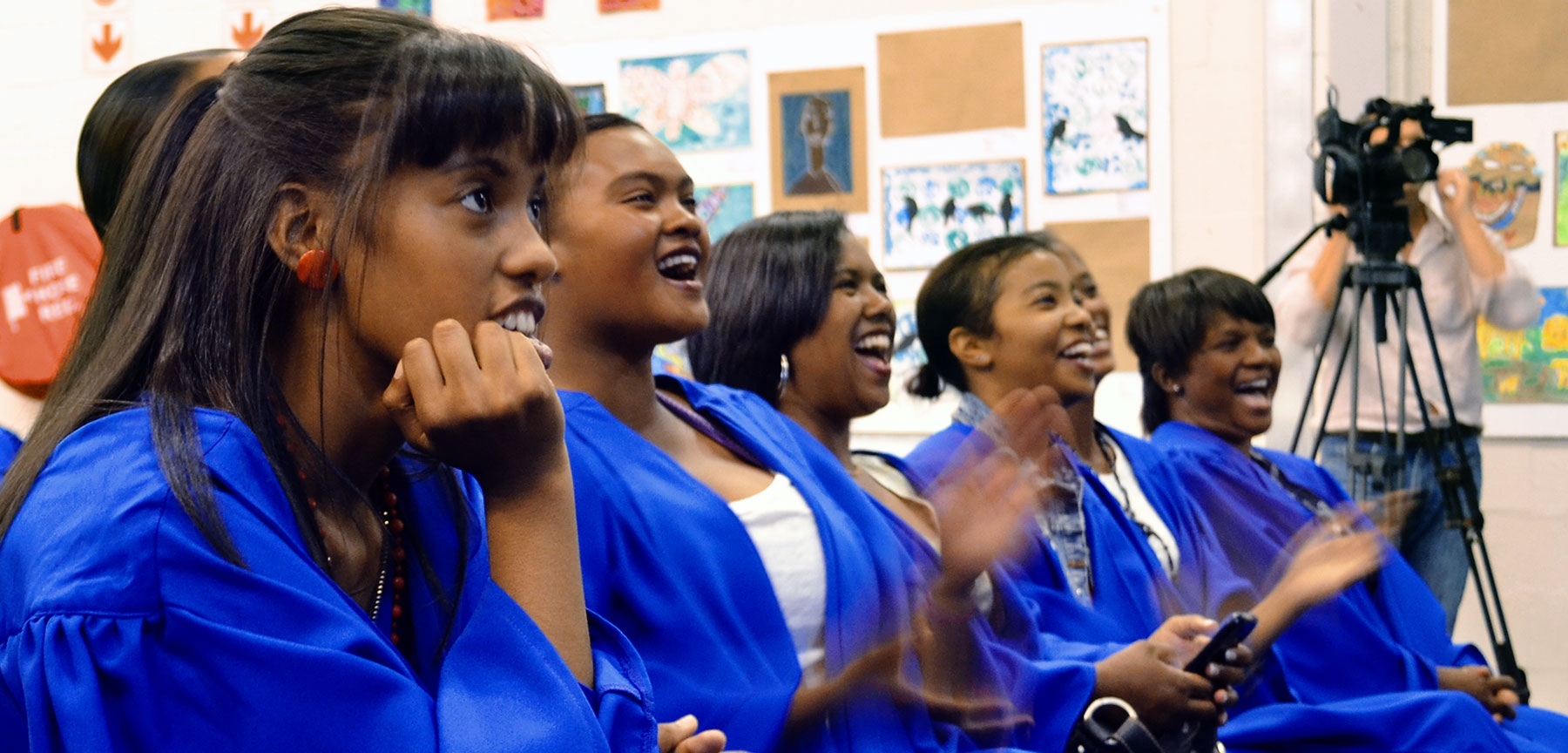
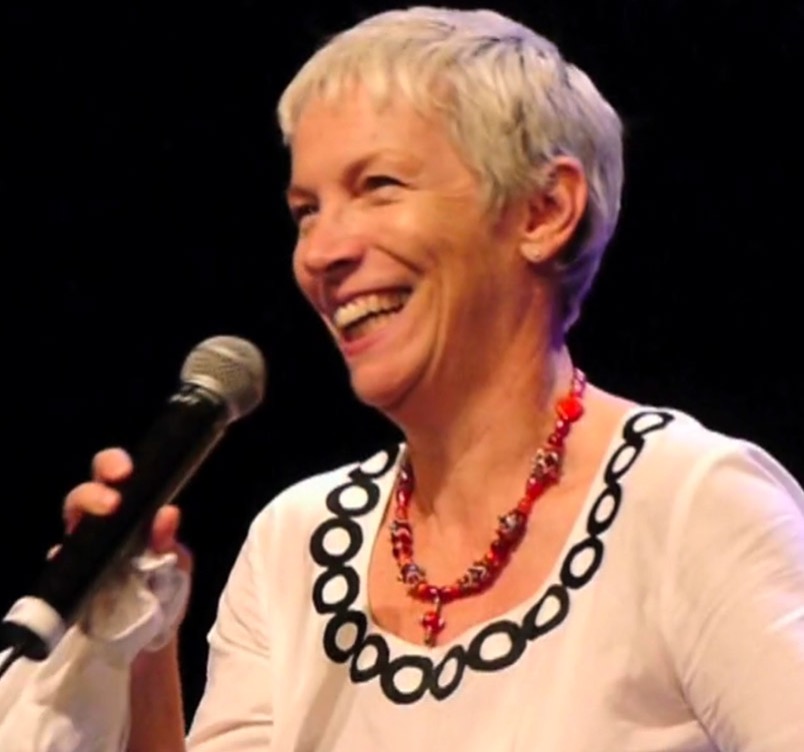
"This is what is so inspiring. This is a fantastic thing. When you just get this little bit of something that is transformational and it’s really making a difference. It’s like a little plant – it looks like a small thing but it can be replicated. That’s what excites me and inspires me. This is optimism! It’s wonderful, wonderful!"
Annie Lennox
Singer/activist/philanthropist, Co-Sponsor, with Sir Elton John, of the Vrygrond Community Centre, original home of the Communiversity
"I am struggling to find the correct wording that would adequately express my deep gratitude and joyous praise for all of you at Communiversity. You honour us as you build the lives of others. This you have done for our precious young people. and that is so appreciated. We look forward to many more years together. With my warmest love, a big thank you! May we go from strength to strength —for many years to come."
Helen Lieberman
Founder, ikamva labantu
The Communiversity Model: Designed for the Community
How does it work?
4 current organizational elements of the Communiversity model:
1 Dynamic community partnerships currently location in 5 Cape Town communities
2 Established relationships with local colleges and universities
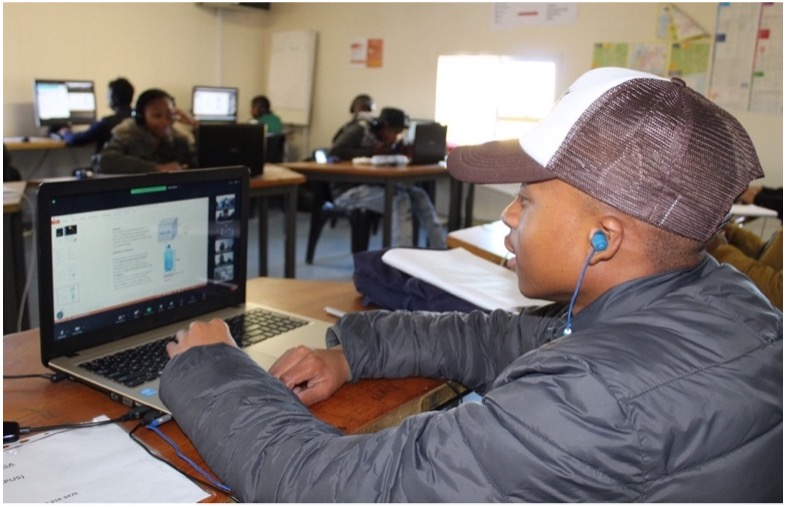
3 Live and lively interactive Zoom teaching
A system that provides a supportive family feeling, along with effective, high-impact learning.
4 Alumni follow-up
Preliminary research on Communiversity graduates has begun and is providing initial insight into the outcomes of the Communiversity program, along with insights for further improvement.
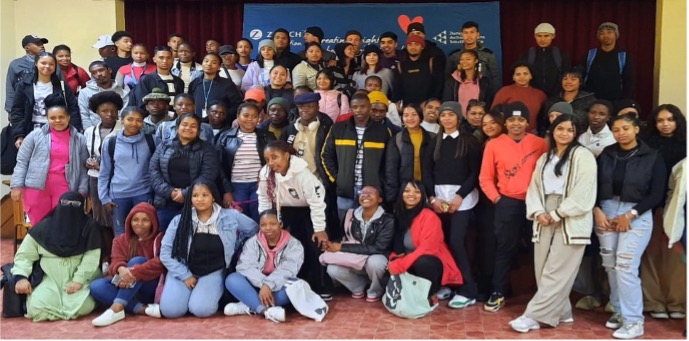
Communiversity received a special award from the South African Department of Social Development through Impumelelo, celebrating innovation in social development projects.
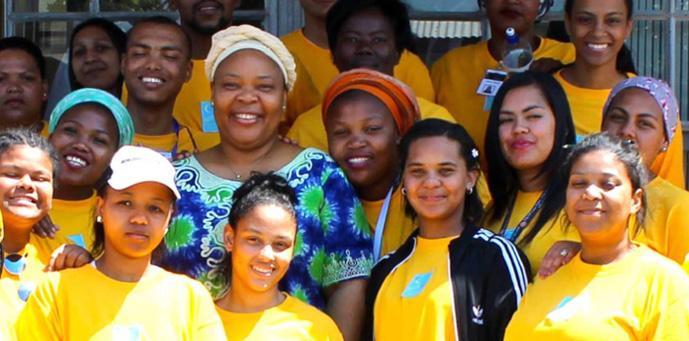
Nobel Laureat Leymah Gbowee of Liberia Speaks to Communiversity Students
Local college teachers and guest lecturers as are invited to introduce students to various fields of study. Inspirational guest speakers such as Nobel Laureate Lehmah Gbowee of Liberia round out the mind- and world-opening curriculum.
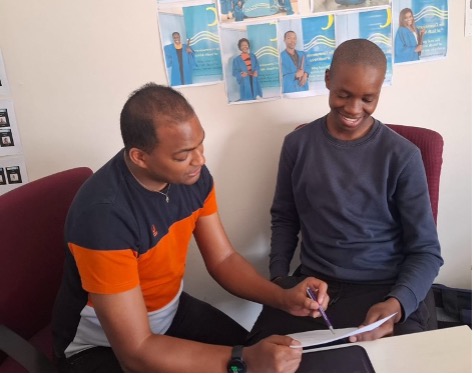
Over the past years, the Communiversity of South Africa has developed strong, trusting relationships with almost all local colleges and some universities. It now has a stellar reputation based on the success of its graduates from its college-prep program, knowing that the graduates have been vetted for 3½ months and have succeeded in graduating from the intensive preparation program.
Nearly all Communiversity students qualify financially for government-sponsored college bursaries/scholarships. To help them embrace this opportunity, the Communiversity focuses strongly on preparing its graduates to be suitable candidates for the local colleges and universities. The tertiary institutions have now opened their doors to Communiversity graduates because they have found that its graduates are generally better prepared for starting college than most entrants straight out of high school, and that these graduates are eager and ready to really commit to pursuing their higher educational opportunities, thereby cutting down on tertiary dropout rates.
"I absolutely boast about the Communiversity graduates I now have the pleasure of calling my employees. I get goosebumps when I talk about these humble, respectful, responsible, amazing people I have had the joy of employing."
Michelle King
National Cinnabon South Africa
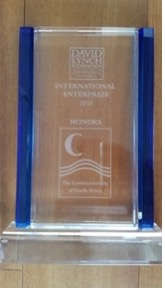
"The Communiversity of South Africa has proven to be a highly beneficial, time-efficient and low-cost model with strong outcomes that we believe could be used successfully throughout the world. The David Lynch Foundation is awarding it its first global “EnterPrize” and is delighted and proud to honor their remarkable achievement– the creation of a ‘bridge to somewhere’ for disadvantaged, at-risk youth."
Bob Roth
Executive Director, the David Lynch Foundation, New York
The Communiversity of South Africa Research Phase Two: Alumni Outcomes 2021–2024
To answer the question of "why the Communiversity?" we are demonstrating that with a high-impact, pre-college preparation of just 14 weeks, a relevant programme can powerfully change the outcomes for the South African youth demographic currently struggling to move forward in life.
What Happens to Our Graduates After Graduation?
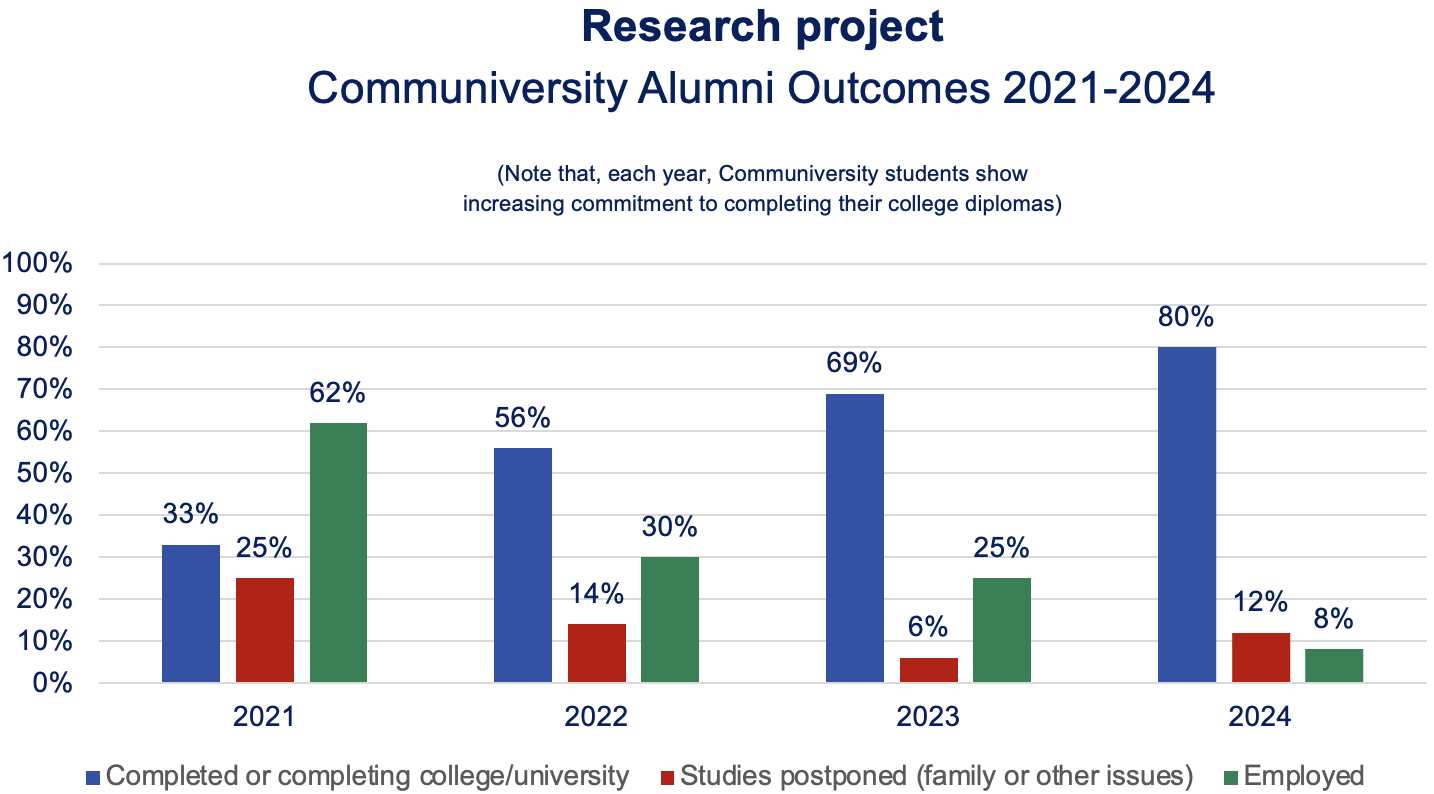
Most non-profit organizations list their achievements as accomplishments that end with their goals being reached. The Communiversity did the same over the years but then, with growing curiosity, we began to look beyond the end goal of college placement and entry or employment or other training for each of our graduates—and started a Phase Two of our research project to find out what happened after our alumni left us and after they were placed. That data has been collected and can be currently summarized as follows:
From 2021-2024, over 91% of Communiversity graduates were accepted into technical colleges, other colleges or universities. Of the students who have now been through the Communiversity program, there is an average dropout rate of 12%, far less than the national college dropout rate, and an average 93% of Communiversity graduates entering college.
Phase Two: Alumni Outcomes 2021–2024
- There were a total of 695 graduates from the Communiversity during the years 2021 through 2024.
- 632 of these graduates gained entry into a TVET or university.
- The higher education placement rate for these four years averages out to 91%.
Compared to the national statistics
- Roughly 80% of student applications to TVET colleges are rejected, based on a ratio of one successful enrolment for every five applications -- or a 20% acceptance rate.
- Communiversity graduates are placed in TVET colleges and universities at an acceptance rate of between 90% - 98%. Or between nine and ten successful enrolments out of every ten applications.
- This means that if you are a graduate from Communiversity and apply to college, instead of applying to a TVET or a university directly from high school, you will have at least a 90%- 98% chance of being accepted into a TVET college or university -- compared to a 20% chance.
Research Results
- A total of 463 out of a total of 695 Communiversity graduates from the years 2021–2024 were interviewed for an alumni outcomes research study.
- These 463 alumni represent 67% of the 632 Communiversity graduates who were accepted into a TVET college or university, a statistically significant representation.
- At the time of the interviews in 2025, a total of 383 of the 463 contacted graduates were either currently studying (220 or 48%), completing training or internships (36 or 8%), or had completed their qualifications (27 or 6%)
- That means a total of 62% of these students are on track to have completed or are set to complete their college work.
Compare Communiversity Graduates with the National Average:
- According to the Dept. of Higher Education TVET statistics report from 2023, only 22.5% of college students complete all the years and components of a college education and receive a National Diploma.
- Comparing that report to the Communiversity results: At least 62% of Communiversity alumni are on track to complete all the years and components of a college education and receive a National Diploma. This is nearly triple the rate of completion when compared to the national average.
- We will have a better picture of these results at the end of 2026 and 2027 when those Communiversity graduates from the years 2023 and 2024 would have completed their college work.